Translate

Monday, 9 March 2020

360 Tour of San Cristobal

The Galapagos islands quite rightly have a very strict rule set. Gaining admittance  to the archipelago  was one set of challenges. 

Another rule is that cruising yachts must stay in one of three designated anchorages in the islands. So, no exploring the coastline solo. (One of the pleasures of our arrival was our cruise along the coast).

To see the coast from the water we had to take a tour. In San Cristobal we opted for a 360 tour which would take us right around the island...a long day trip in a powerfully engined boat. Tours are also rule ridden...no more than 10 tourists per Official Guide.

Our boat left the dock at 7.30am. Just over half an hour later we were arriving at the most spectacular snorkelling site. Named Kicker Rock or Leon Dormido (Sleeping Lion) this volcanic tufa plug rises dramarically out of the sea, with deep deep water all around.


There was no possibility of our boat dropping its anchor. Ten slightly nervous tourists jumped over the side of the boat, following our guide. 


Our guide was a very talented guy, able to spot wildlife above and below the water and lead us to it,  tell us about what we saw engagingly in both English and Spanish, keep tabs on us all to ensure our safety, and furthermore was able to shoot lots of footage of our group and the wildlife we were observing. 

We swam towards the towering island rock, swimming for a while alongside a Galapagos sealion, who chose to keep us company,  and then into the narrow canals between the three huge tufa rocks.


Within a short period of time we had watched hammer head sharks (with their impressive and unmistakeable hammer shaped heads, gliding around a couple of metres below us. Smaller, more conventional-looking  black tip sharks, and Galapagos sharks swam nearby. 


Shortly, a large eagle ray swam close by. In addition to these very exciting species sightings there were hundreds of other fish, of all shapes, colours and sizes. It would have been wonderful to linger for longer – but the best we can do is return for another visit. As we emerged from the canal into open sea we were joined by a couple of large turtles.


Our next stop at Sardine Bay took us to a beach with the most gorgeous powdery white sand. This sand is the product of parrot fish, who feed on the coral and then excrete this white powder. We were walking on luxury poo! – the rules were strict, bare feet only on this fabulous sand. No shoes!  We enjoyed an unguided snorkel - seeing lots of huge parrot fish (of course) as well as colorful damsel fish and so many others that I couldn't  identify.


Our boat took a ten minute pause at the Eastern most tip of the island, Punta Pitt for us to watch the booby birds.  The blue footed boobies get their distinct foot coloring from the lipids in their fish diet (deprived of fish, the blue fades) Whilst we could see the red footed boobies (who have a diet principally of squid) they were too far away to take a decent photo. Hopefully we get another chance some time soon.


As we pulled away from this point we were suddenly surrounded by dolphins. Hundreds of them surrounded our boat, leaping and playing all around us. Our boat spent quarter of an hour circling the area, so we could enjoy their company.


This end of the island, (south and east) is barren. Rainfall is very slight compared to the western end (explaining why the villages have grown up where they have)


Our last stop of the day was at this sea lagoon, accessed by a walk over a black lava footpath, past tall cacti.


Here we hoped to spot some white tipped sharks. But this is not the zoo, and we didn't get lucky on this score today. Instead we enjoyed watching huge - and we mean huge - yellow back turtles, feeding and meandering through the rather murky waters of the lagoon.


Then it was an exhilarating fast ride back to port, with 600 hp of engine behind us. Turned out it was a great day to have chosen for the trip - not only did we see so much wildlife, but also we appreciated the blue sky day on the sea....it had bucketed with rain on land!


Saturday, 22 February 2020

Passage to the Galapagos and story of Birdie

After three weeks in the marina preparing for the Pacific we left Panama in a process we defined as "Splash and Dash", to ensure that there was no time for marine growth to gather on our hull, for we had to be sure of arriving in the Galapagos with a clean bottom.  Our optimised process Checking out in Panama Ciry on Thursday, splashing on Friday and sailing on Saturday.  This relied on us being ready, the final boat preparations going without a hitch and the weather being compliant.   

Splashing at Vista Mar is somewhat unusual or perhaps heartstopping, here Clare is holding on to avoid slipping back into the cockpit.


We engaged MetBob for a passage route, which surprisingly stated that it would take 5 days when all our software based planning was for a 6 to 7 day passage.  What boat speed was he thinking of, at least we knew the weather window allowed us to leave a day later so we didn’t need to worry about taking longer.

Final provisioning complete we left the marina around midday looking a little low in the water.


The trip was very comfortable despite starting our second day with a near Gale (sustained 35 knot gusts)


 and then learning how to sail in very light winds and strong currents, but it will be remembered for being one of our easiest passages and for the story of Birdie.

As the winds calmed and as dawn broke on our third morning we noticed a young gull had taken up residence towards the bow.   Gingerly this gull, quickly named Birdie, moved forwards.  We were shocked to see it had a fishing line tight around one of its legs.


A day of edging closer and then pulling away got us to close proximity by lunchtime, helped by a few breadcrumbs.  Thanks for Bryana for on line veterinary support, Birdie seemed to know we knew what we were doing.  When first presented with a large blue towel Birdie shied away from us but then came closer still.  We became aware that we were being checked out by a small animal that didn’t know whether it could trust us but equally seemed to know that it had no option.


Moving bravely into the cockpit.
Free at last and now moving back to the bow of the boat
As dusk drew closer we sat down to eat, something we try to do before dark as that makes dinner a pleasant end to the day and start of the more formal overnight watches.   Birdie came closer, drawn in by the steak we were eating and impressing on us an increasing sense of urgency, with Clare holding the towel, Birdie allowed us to pick him up.  We had considered wearing protective glasses in case he became scared and tried to attack our eyes but he was totally calm and for the intricate operation I needed as good vision as possible.  The fishing line was tightly looped and knotted around his legs, each thinner than the line itself.  With large wire cutters needed to cut the line an advertent amputation would have been so easy, but Birdie remained calm and when I reached the final knot he pushed his leg out straight so I could access it easily.   We removed the final knot and let Birdie go.

He walked about a bit, took to the air and then to the water.   Now, this is not a Disney movie so there was no music but in a completely surreal moment 10 to 20 dolphins leaped out of the water and played along side us and Birdie for a few minutes until darkness fell.

Birdie spent most of the night with us, watched us perform a major sail change at around 2.00 am and sometime later left us, we hope for a long life at sea.

We sailed on into lighter winds and some motoring but in strong currents continued to make good time.  We crossed the equator at around 0400, despite the early hour we managed a brief ceremony being "griffins",  not entirely up to the standards of that reported by Darwin on HMS Beagle.

"A similar ceremony took place during the second survey voyage of HMS Beagle. As they approached the equator on the evening of 16 February 1832, a pseudo-Neptune hailed the ship. Those credulous enough to run forward to see Neptune "were received with the watery honours which it is customary to bestow".[2] The officer on watch reported a boat ahead, and Captain FitzRoy ordered "hands up, shorten sail". Using a speaking trumpet he questioned Neptune, who would visit them the next morning. About 9am the next day, the novices or "griffins" were assembled in the darkness and heat of the lower deck, then one at a time were blindfolded and led up on deck by "four of Neptunes constables", as "buckets of water were thundered all around". The first "griffin" was Charles Darwin, who noted in his diary how he "was then placed on a plank, which could be easily tilted up into a large bath of water. — They then lathered my face & mouth with pitch and paint, & scraped some of it off with a piece of roughened iron hoop. —a signal being given I was tilted head over heels into the water, where two men received me & ducked me. —at last, glad enough, I escaped. — most of the others were treated much worse, dirty mixtures being put in their mouths & rubbed on their faces. — The whole ship was a shower bath: & water was flying about in every direction: of course not one person, even the Captain, got clear of being wet through."  (Source wikipedia)


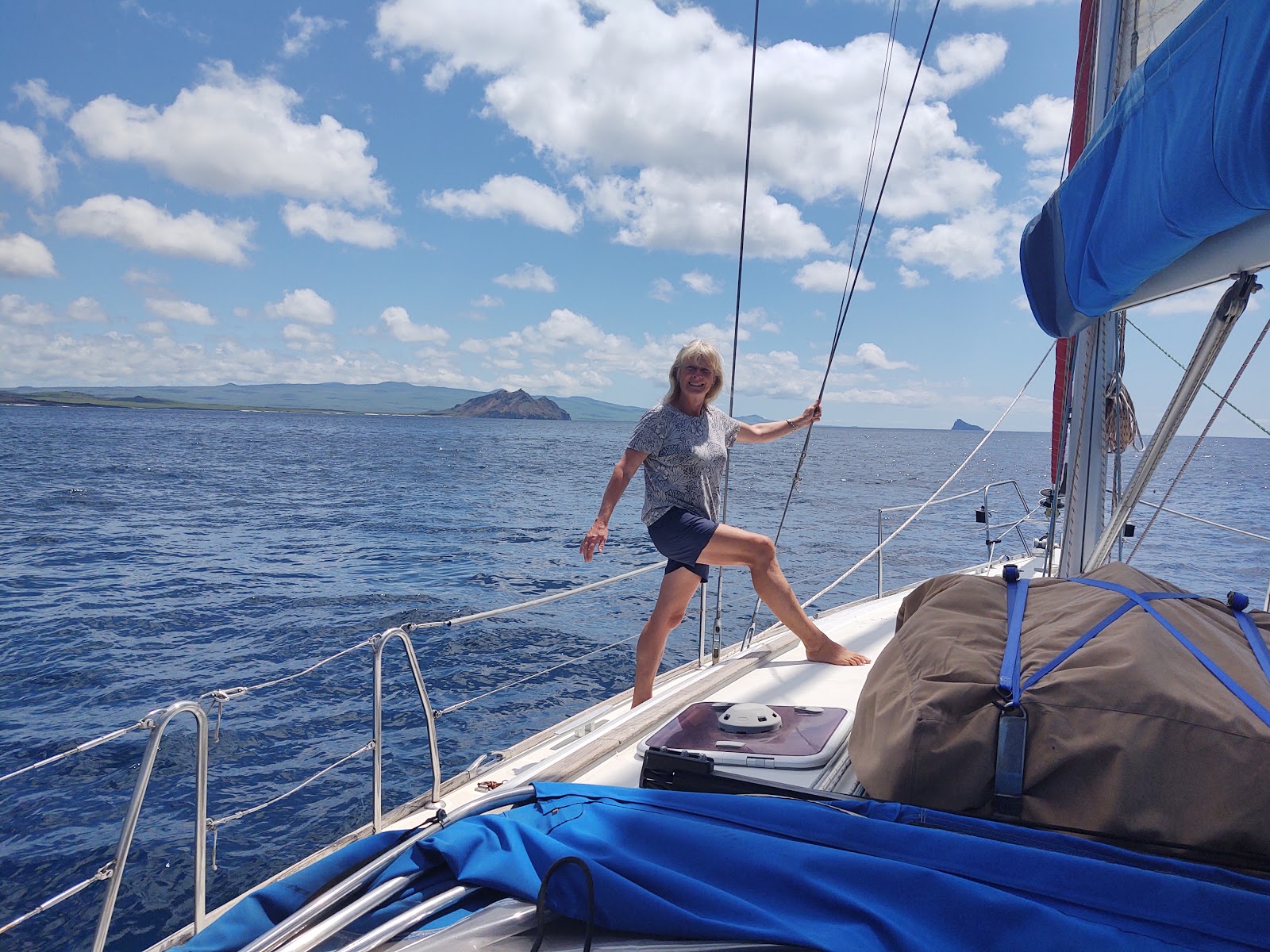
Later in the morning of our fifth day we realised that we could arrive before dark.   We passed Kicker Rock, famous for hammerhead sharks and enjoyed a gentle cruise down San Christobal.

5 days and 5 hours and 910 track miles after leaving we dropped anchor on San Christobal island in the Galapagos, awaiting with trepidation our bio security inspection on Friday morning.  Our fastest and most comfortable passage to date.


Tuesday, 18 February 2020

Preparing to Leave Panama; San Carlos, the yard, and the splash

Returning to the Tintamarre after our brief visit to the UK was a bit daunting. Tintamarre had been hauled and placed in the marina yard whilst we were away - and we knew there were a few things to fix - notably our steering and windlass (which had both broken) - and our keel needed re-treating after being dragged through the mud at the mouth of Rio Dulce in Guatemala.

We also needed to buy in lots of provisions for our long trip across the Pacific - planning on buying in everything we might need over the next 6 months.

We found Tintamarre perched rather precariously ...climbing on board required a bit of concentration.


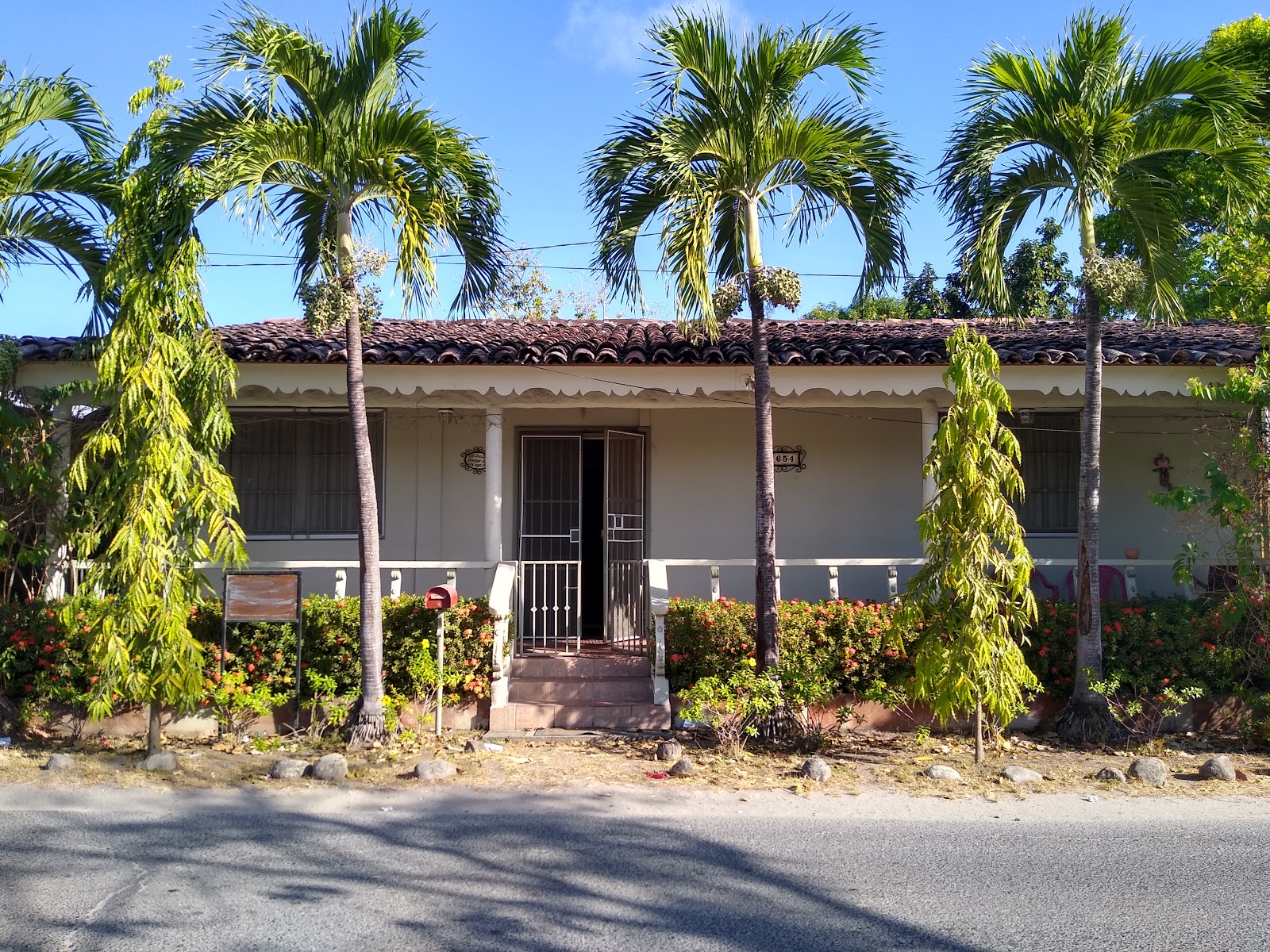
We had planned on staying on board...not a comfortable thing to do, but the options seemed limited. When the marina informed us on day 2 that permission to do this was cancelled for everyone we were grateful to be offered accommodation in San Carlos, a small village a half hour walk across the beach. Tim and Jenni's casa was a delight, attractive, central, spacious and very comfortable.


And we enjoyed our daily walk across the beach past the fishing fleet.


We beavered away at our job list....


And brought in endless bags of food, drink and other necessary supplies, which all needed to be sorted, recorded on our spreadsheets, and safely stowed (as well as having to be hauled up that ladder). Complicating matters a bit further, our next port of call, The Galapagos has a long list of products which may not be brought to the islands. We knew that boat searches are routine there...


After a hard day in the yard we enjoyed catching up with old and new sailing friends. We visited the Chinese (Panamanian style, of course), Restaurant, opposite our village casa every evening (menu del dia was less than $5 and very good.)

We were also "treated" to the start of carnival in the village. Festivities happened on our doorstep (literally) - loud music, processions and fireworks which continued until 3am. 


With our jobs nearly complete, and knowing that we had to wait for a high tide before we could put Tintamarre in the water we took a day out to visit the nearby Highland town of El Valle. A $1 bus ride took us miles into the hills, through orange groves. Sited within a massive caldera this little town is famous for rare golden frogs (we didn't spot any). But we did climb the Sleeping Princess mountain, passing old petroglyphs on our way up. With a strong cooling wind blowing at the top we enjoyed the view.


Leaving the country we adopted a strategy of "splash and dash" - so that Tintamarre would sit in the marina for as little time possible before leaving - minimising the chances of growing barnacles on her newly cleaned hull (something which were very mindful of with our impending visit to Galapagos). So the day before our planned splash we took the bus to Panama City and checked out. (As an aside, public transport in Panama is fabulous. The hour and a half bus journey into central Panama City on a comfortable bus cost just $2.50. The clean and modern metro and bus services in the city were just 25 cents a ride, easy and pleasant to use.)

Splashing Tintamarre was at best unusual. We were in the UK when Tintamarre was hauled out. Vista Mar Marina used a trailer system, on a steep ramp, with big tides and strong winds omnipresent. We waited for a suitable tide, ensured that Tintamarre was loaded on the trailer in good time so that she could be launched at high tide. Just prior to launch we climbed on board so we could start the engines and speed away as they launched us. I would never choose to use this launch system again.  Somehow we survived the experience.


We filled with fuel and water and with no slips immediately available remained on the fuel dock for the night. The next day, late morning, all preparations and checks complete, we said a last goodbye to friends, slipped our lines and left for the Galapagos.


Tuesday, 28 January 2020

Three Weeks in the UK was not long enough!!

We planned a three week trip back to the UK to see family and friends, catch up on some medical issues (including obtaining MMR (measles) jabs, and complete some admin before heading off on the long haul across the Pacific. Andy celebrated his (big) birthday as many times as he possibly could! Grandson James enjoyed helping Andy blow out some re-igniting candles!


We rushed hither and thither... travelling from Cornwall to Scotland in our rather small hire car. It was lovely to catch up with everyone that we possibly could. But three weeks wasn't enough. Thankyou to everyone for your warm welcomes, and apologies from us both for not having nearly enough time!

Wednesday, 1 January 2020

Panama Pacific

Once through the canal and into the Pacific we picked up a mooring at Balboa Yacht Club; close to the centre of Panama City, with a procession of huge cargo vessels passing close by on their way in and out of the canal, yet at the same time seeming surprisingly rural. As if by magic, the skies cleared, and we awoke the next morning to clear blue skies.


We enjoyed a day ashore exploring some of the city highlights; the canal museum, the  old city  with its cobbled steeets, ruins and rather lovely churches - one of which housed the most magnificent Nativity themed model village.


From the old town we wandered down to the fish market, admiring the contrasting 21st century skyscraper skyline in the distance. 


The fish market was a good choice for lunch - after we had perused the fishy displays  within we were spoiled for choice with rows of low key eateries lined up around the edge. We feasted on local cerviche and a seafood soup. 


The latter part of the day we raided the supermarkets for supplies to ready ourselves for a week off shore in Las Perlas Islands (The Pearl Islands) - an archipelago about 30 miles off shore.

Our sail out to the islands was complicated by the need to cross very busy shipping lanes. Maybe we were just unlucky with our timing, but the succession of huge ships bearing down on us in rapid succession made us feel like pedestrians attempting to cross the M25. Listening  in on vhf radio to the marine traffic one got a sense of the nervous  urgent energy on the bridges of some ships. Nobody was going to give way to us, so we were forced to sail in the wrong direction for some time before we could cross safely.

We arrived in the anchorage of the island closest to shore, Contadora, mid afternoon - in plenty of time to meet up with friends already at anchor there to celebrate New Years Eve that night. 


Over the next several days we enjoyed exploring some of these islands:- they are surprisingly undeveloped, with few facilities, and although some anchorages were buzzing with local new year holiday traffic, generally the islands were peaceful and gorgeous.  


Beaches were empty, and we enjoyed beachcombing, finding some special big cowrie shells along the high tide line. Snorkelling one had to be careful of strong currents. The Pacific has big tides - a contrast to the Caribbean Sea where the tides are slight and therefore strong currents are unusual - and the water has a different quality - said to be because it is nutrient rich, but may be the tidal turbulance, moving over the sand is another factor - whatever, the water seemed different.  There were very many fish to watch - millions of small fish moving as a stream together, groups of manta like rays, leaping and frolicking  together, and huge sting rays - as well as many other species. But they all seemed less colourful than their Caribbean cousins. Even the parrot fish seemed rather grey. Happy to say that the water was warm....but in the coming months may cool considerably.


We discovered not just one but two islands here are used for filming purposes. One of these islands wouldn't  allow us to land on account of on going filming activities - although we  anchored in another bay and enjoyed exploring the rock formations and caves by dinghy.  Another island was home to the US reailty show "Survivor". It was easy to see why these islands would be so good for these purposes. They lie quite close to shore   and an international airport even - and yet remain unspoiled, with Robinson Crusoe style good looks. It was as well that we had stocked up our on board food supplies - the tiny shops we found ashore sold very little.


A weeks cruise in the company of our friends on Venture Lady was a perfect way to end this part of our journey. It was time to head to the marina a short way up the coast (an excitingly fast sail which had us dodging  a fishing fleet and keeping the dolphins company). With the boat safe in the marina we headed back to the UK for a 3 week visit to family and friends.


Friday, 27 December 2019

Panama Canal Crossing and the Story of the Little Red Boat


The Canal

Unlike the man that went up a hill and came down a mountain, the workers on the Panama canal went up a mountain and many never came down, the rest left a canal behind for us all to enjoy, and they did it almost entirely by hand.   Over 12,000 workers died during the building of the canal, but this is far fewer than the 22,000 workers that died in the failed attempt by the French to build a sea-level canal.  The French may have failed but so much was learned that some credit for the eventual success has to be given for their failure.
Source: timetoast

Source: Slideshare

Gliding through Gatun lake or through the Culebra Cut one cannot appreciate the work involved the calm flat waters conceal the deep cuttings below and the mountains above are, well, gone.

Source: GE.com

The scale of the locks can only be appreciated from inside them.  In such a strange environment it looks normal to see small electric railway engines climb 45-degree slopes between the locks.  
source GE.com


These engines tow the boats through the locks, though in the new Panamax locks they use tugs, as the advisors said,  “to be different”.   The engines’ drawback is their cost but they allow for ships to be packed tightly together, something not needed in the new locks as only the largest vessels can use them.

For more information on the canal see this history of the Panama Canal.

The story of Tintamarre and the Little Red boat


It is quite easy to say we will transit the Panama Canal, as if cruising the UK canal network.  But sailing boats are not designed to go into sea-going locks and the largest ships are uncomfortable having small boats under their bows.  We, however, seemed quite large compared to a little red boat called Colibri that was destined to transit the canal with us.

The little red boat was feeling sad because it saw all the sailing boats come and go from the marina in Shelter Bay and never knew where they went.  But one day, a nice French girl, Chloe, said – don’t worry little red boat, I will take you through the canal.  So she filled in all the paperwork and said that the little red boat could motor at 5.5 knots, had holding tanks and could go in reverse.  Everyone was happy, especially the little red boat who had never been to the Pacific before so she was able to set off with her new friend Tintamarre, who looked very big and grown-up until she passed a cargo ship.  

Setting off the little red boat, looked just a little crowded with 6 line handlers and the Canal advisor.  She was loaded with 4, 30-metre lines required to secure the boat and 8 tyres acting as giant fenders.
A few days before the transit we were officially measured and given our Ship’s number for the transit.  It is normal for sailing boats to transit the locks “nested”, with up to three boats rafted together. We had practiced this with our friends when we acted as line handlers so we thought we knew what to expect, how wrong could we be?

We rafted up with the little red boat below the first lock and waited for our turn to enter, behind 2 ships and two tugs.  Except that there was no room for us in the lock. 

Four hours after setting off for the 5 miles to the locks, and in the rapidly descending darkness, we were still going round in circles with the little red boat tied to our side.  The big ships were finally shuffled forwards providing enough space for us to tuck in behind them and in front of the lock gates.  


And then it rained tropical rain for the entire passage up to the Gatan lake where we moored overnight with us tied to a large and somewhat surreal blow-up mooring ball. The happy little red boat tied to us and the two boats spent the night chattering away as they rolled in the wash of passing tug boats.

The next morning we were given a late start for our transit of the canal to the Pacific locks so we had to make good speed to make the appointed time in the locks.  Fine for us, but for the little red boat that had never motored 26 miles in her life and certainly not at 5.5 knots, something had to change as they fell behind us and behind schedule for the descent to the Pacific.  One might say the little red boat cried and cried because she thought she would be left behind on the lake, never to be seen again.

We will never know whether it was the boat's charm or her skipper’s smile or another Gaelic shrug, but looking behind us we could clearly see sails on the lake.  The little red boat was sailing.  It is normally, always, forbidden to sail on Gatton Lake, which is a shame as it is a beautiful lake with lots of inlets to explore but ships and little boats are not allowed out of the main channel.  But the advisor on the little red boat, a trainee pilot, had against all protocols called canal control and obtained permission to sail, the little red boat would go to the ball after all, and her sails were raised and with smiles all round she flitted across the lake.  
We were soon re-united with the little red boat as she chugged through the Culebra cut towards the Pacific locks.


Both ourselves and the little red boat were lucky to have trainee pilots on board and not the pleasant but less skilled advisors we had been told to expect.  Trainee rather understates their skills as they were both full Ships Masters, ours had been the executive captain (second only to the full captain) on a cruise ship before starting his training.  These trainees would soon be guiding LPG carriers, car carriers, and huge container ships through the locks taking full responsibility for the ship. 

Our advisors, either to have some fun or to practice new maneuvers, arranged for us to go down to the Pacific with a commercial catamaran.  


This boat would attach to the walls of the lock and let down on ropes closely attached to the dock wall.  We would dock with it as if it were a floating pontoon.  Simple as this sounds, they always had to go first – but they couldn’t move until we had undocked from them.  To do this we had to go backwards.  Except when we practiced outside the lock we found the little red boat didn’t really know how to go backwards, certainly not against the mysterious currents in the locks.  So we were given the task of reversing as a raft and one case where we had to change sides, ejecting the little red boat into the current only to catch her again as she was carried past us in rapid currents that flow through and around the locks.


Docking involved approaching the catamaran with as much control as possible when docking with the current, something you should not try at home.  As the advisor said nothing can go wrong if they catch the line as we floated past rather too fast.  Each time the lines were caught, the cleats held and the little red boat found just enough power in reverse to help us steer backwards.  


On one occasion we were forced to go under the bow of the ship behind us, our mast just missing the overhanging bow while the catamaran released itself from the side wall.


Some 24 hours after entering the canal we dropped out into the Pacific, at the top of a 5 metre tide as darkness fell, this time the little red boat leading the way out.


As we ran the last few miles a large canal authority boat ran alongside us and the advisor, arm held outstretched and gripped by the crew on the canal-authority boat leaped across the void. The little red boat and Tintamarre said goodbye to their line handlers, advisors, the lines and each other at the World Famous Balboa Yacht Club ready to start their next adventures, hoping to meet again somewhere in the Pacific.

A technical note on currents in the locks 
Everyone knows that when the lock gates are closed and water is flowing in and out there will be strong eddies and current but when the gates are open, the water is level, then it should be calm?  It is like a piece of magic because before one's eyes the calm waters start to flow, first slowly then rapidly.   You have to move before the current gets too strong. 
These mysterious currents happen because one is descending in a lock full of freshwater to meet a lock or the ocean filled with seawater.  These two masses of water with different specific densities are lying next to each other.  The freshwater wants to rise to the top, so it starts flowing forwards over the top of the saltwater with increasing speed as a circulating current is established with the top layer moving forwards and deep down in the lock the saltwater moving backwards, taking only a few minutes to become a torrential rush to the downstream end of the lock.  If you are not tied up before this flow gets going you end up in the lock gates.  The failure of the catamaran to move off promptly left us managing these currents as we were delayed long enough after the gates opened for them to start flowing, well beyond the capabilities of the little red boats reversing powers.
 
..and the little Red Boat is really an historic racing boat built in Brittany, probably somewhat better than most modern yachts.`